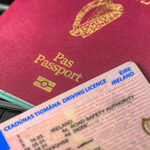
NB: You can also apply for a Drivers Licence at https://irelandlicence.com directly without EXAMS or TEST. All licence issued are fully registered into the NDLS & RSA Database.
How Long is a Driving Test in Ireland?
Driving is an important skill set to possess as it allows a person some autonomy and freedom to move from one place to another. In Ireland, a person attempting to receive a driving license needs to clear a practical driving test as an evaluation to determine one’s capability to handle a car in a safe and skillful manner. One of the basic questions that learner drivers have is the question of, ‘How long is a driving test in Ireland?’. The purpose of the test outlined in the rest of the article is to describe the driving test in detail what one is asked to do, and to provide the assessors with key pointers to the assessors to defend their answers.
Summary of Driving Test in Ireland and how to apply for full license
In Ireland, the driving test is scheduled and organized by the Road Safety Authority (RSA). The RSA is the governing body that regulates and controls the approval of a full Irish driving licence. Driving tests are not only a mere formality, and there are certain expectations that the candidate is expected to fulfill. The RSA expects a candidate to exhibit competent basic driving skills, the primary set of rules that govern driving, and how to deal alongside with practical traffic. In order to capture all the skills expected from a candidate, there is a set of parameters under which a candidate is expected to fulfill.
To apply for full license, candidate is expected to successfully pass in the practical components of the test which are a pre-requisite of the driving license, and submit certificate of competency received together with their learners driving license, to receive their Full drivers license.
How long is a driving test and what does it entail?
The practical driving test in Ireland lasts about 40 minutes. These 40 minutes is inclusive of all the different elements of the following assessments.
Vehicle Safety Checks (5–10 Minutes):
- Prior to the start of the drive, at the start of the drive, the examiner will attempt to complete a short pre-test check to verify the vehicle is at least in a decent state to go on the road.
- The examiner might ask you to explain and demonstrate the controls and the safety equipment on the vehicle.
Driving Portion (30–35 Minutes):
- On this segment, you will independently drive a vehicle in the traffic, and you will be graded based on your ability to drive on the actual road.
- The examiner will take you on a set path with designated areas to drive with and traffic to navigate through on different types of roads.
Post-Test Review (5 Minutes):
- After the driving segment, the examiner will give you their impression of what they think your driving ability is, what you might have done wrong during the test, and whether or not you should expect a pass.
- You will be granted the certificate of competency, which in turn will go you a step closer in obtaining your full Irish driving licence.
What Happens During the Test?
This can be stressful, however, breaking the driving test down into sections can ease the burden a little. Here is what we all expect during the test.
- Vehicle Safety Checks
The vehicle will be at the test venue. The vehicle must be roadworthy, and the examiner might ask you to check the vehicle is roadworthy and perform basic safety checks. This may include the following.
- Proving to him the lights, indicators, and wipers in working order.
- The brakes and the mirrors.
- Securing the fastening of the seatbelt.
These activities are fundamental to ascertain that the company is confident you are familiar with the vehicle at the very basic.
2. The Driving Route
The driving portion of the test is conducted on public roads . You will receive instructions during the test and you will have to perform several driving actions, such as:
- Starting and Stopping: The vehicle will be evaluated on how you start and stop the vehicle. You will begin the test by driving away from the test center.
- Turning: You will perform turns to the left and right, and you will be scored on how well you use the mirrors and the indicator.
- Roundabouts: Driving on roundabouts is another segment of the test. You will be required to show that you know the roundabout and also understand that there are other cars and people.
- Parking: The examiner might require you to do parallel or reverse parking and also do a three-point turn. The examiner checks how you can drive in tight areas.
- Driving in Different Conditions: You might have to drive on busy roads, in residential places, or in a rural area. The examiner checks your adaptability in as well as to the conditions changing.
3. Communication and Instructions
The examiner will be giving instructions to you throughout the test. It is very important that you hear them and have questions to ask. You are required to perform the instructions that you hear and have to drive safely throughout.
Scoring and Evaluation
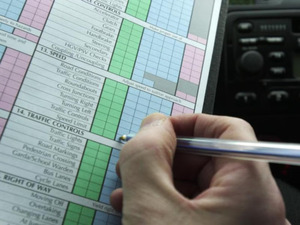
In vehicle’s driving test, examiner will derive a score based on numerous aspects:
- Control of the vehicle: Gradation of acceleration, braking, and steering.
- Attention and Observation: Use of mirrors and watching out for pedestrians and cars.
- Complying with Traffic Rules: Observation of speed limits, road signs and traffic lights.
- Driving Skills: Safe execution of different maneuvers, such as parking and turning, as well as driving encompassing the whole driving area.
The examiner will record and comment on the mistakes after the test. The most sensitive part relates to the perceptions of such mistakes and near-machine accuracy. Everything is driven apped to pinpoint reminders as sufficient to pave to a failure.
Preparing for the Exam
The 45 minutes allocated to the test simply means there is no room for idle stretches. With such a concrete number allocated to the test, the last thing that should happen is that candidates should prepare so that there is no room for disqualifying matters:
1. Enroll to a Registered Driving School.
Self-driving can clip the interest, but without true proper confidence, Self-driving one can adopt too many bad habits. Car instructors will be able to balance the level of confidence on road and visibility to driving circumstances that simulating test situations is appropriate.
2. Practice Regularly
A competent driver must master the art of driving along with other relevant competencies. Focus on improving in all relevant areas like:
- Shifting times of the day
- Shifting the rainy season, fog, etc
- Driving in both urban and rural areas
One of the supports you gave is that, Shifting times of the day, and then along with that, all the other supports they gave, will assist you in overcoming the other driving challenges.
3. Know the driving test route
Although you will not have access to the driving exam route, there is some utility to knowing at least the area of the exam center. Local road signs, speed limits, and typical traffic may be helpful.
4. Review all the rules of the road
You have to review the road and all traffic rules with the purpose of answering the test in the best way. Know your rights and duties in the test and also the driving test.
5. Remain calm and focused
Most people display signs of test anxiety, but it is crucial that during the driving exam, anxiety is at a minimum. Try doing some calm relaxing techniques such as slow deep breathing. It is very normal to be nervous, and it is very normal to take your time throughout the time, and that is even the time that you’ll probably get the most productive output.
What Happens If You Don’t Pass a Test?
Almost all candidates fail a test on the first try. If you take the driving test and fail, be assured there is feedback on the areas you need to improve on.
What to Do After You Have Done the Work and Still Fail
- Improvement Audit: Everybody moves as they review their failures, in this case the fail you did. Move to the next step always aiming to learn what went wrong and do something about it because the blame game will never help you learn a thing.
- Book Additional Driving Sessions: It is important you know the need to prepare for something if you do not already know.html.
- Rebook the Driving Test: You would have to take the driving test once you feel you have mastered all the necessary driving skills, however, the waiting period is for the slot availability and not skill. Hope you would have mastered all the relevant skills, if this assumption is wrong, then feel free to take the driving test.
Final Thought
As mentioned the driving test does take approximately 40 minutes, there are safety checks, a driving route, and then the post-test review. When attempting to enhance the chances of getting the driving license, the individual needs to know the test structure, prepare for it, and practice within getting a calm state of mind. Regardless of resident status, the driving skills are a must for a person traversing on the roads in Ireland. Certificate of competency marks the start to apply for full license to reap the privileges of a full Irish driving licence. With that, you are ready to submit the application. Wishing you the best and a happy driving experience.